
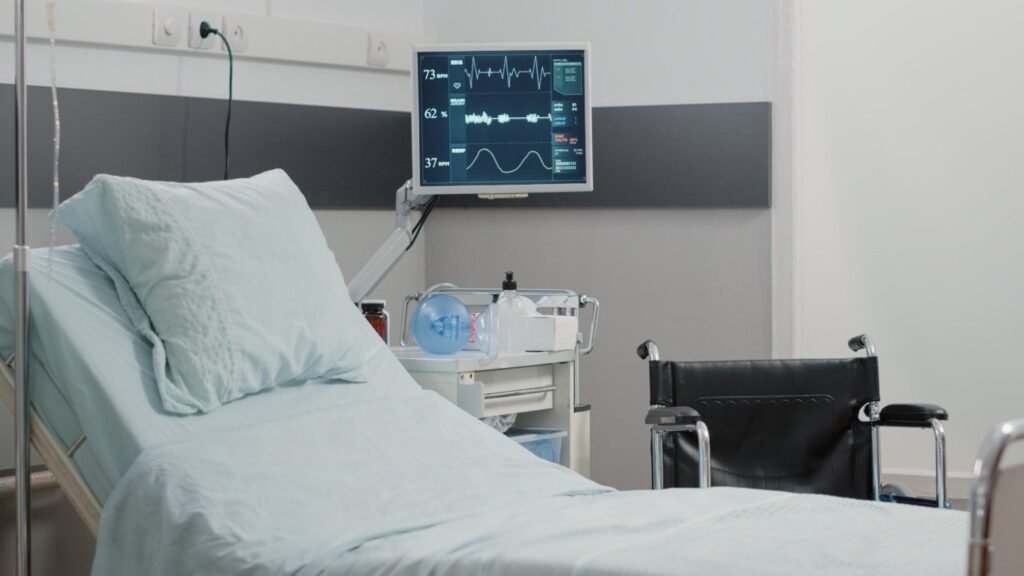
When a patient becomes seriously ill, timely medical attention, continuous monitoring, and advanced treatment can be extremely important. An ICU Hospital in Greater Noida provides specialised critical care for patients who need close observation and medical support beyond what is usually available in a general ward. Intensive care may be required for severe infections, breathing difficulties, major injuries, organ-related problems, complications after surgery, or other life-threatening conditions.
For fast information, contact us on WhatsApp.
An ICU is designed to provide continuous monitoring and support for patients whose condition can change quickly. Specially trained doctors, nurses, and other healthcare professionals work together to assess the patient’s condition and provide appropriate treatment.
What Is an Intensive Care Unit?
An Intensive Care Unit, commonly called an ICU, is a specialised hospital area for patients who are critically ill or require intensive monitoring. Unlike a regular hospital ward, an ICU has advanced monitoring systems and equipment that allow healthcare teams to observe important body functions closely.
Depending on the patient’s condition, monitoring may include heart rate, blood pressure, oxygen saturation, breathing rate, temperature, urine output, and other clinical parameters.
The main objective is to identify changes in a patient’s condition early and provide appropriate medical intervention when required.
How Does an ICU Hospital in Greater Noida Provide Critical Care?
An ICU Hospital in Greater Noida can provide critical care through a combination of trained medical professionals, continuous monitoring, advanced equipment, diagnostic support, and coordinated treatment.
1. Continuous Patient Monitoring
Critically ill patients can experience rapid changes in their condition. Therefore, continuous monitoring is an important part of intensive care.
ICU monitors can track vital parameters such as:
- Heart rate and rhythm
- Blood pressure
- Oxygen saturation
- Respiratory rate
- Temperature
- Urine output
- Level of consciousness
Doctors and nurses can use these observations to assess whether the patient is improving, stable, or requires changes in treatment.
2. Respiratory Support and Ventilator Care
Some critically ill patients may not be able to breathe adequately on their own. Depending on their condition, they may require oxygen therapy, non-invasive ventilation, or invasive mechanical ventilation.
A ventilator can help support breathing when the lungs are unable to provide sufficient oxygen or remove carbon dioxide effectively. The medical team continuously assesses the patient’s respiratory status and adjusts treatment according to clinical needs.
Ventilator support does not necessarily mean that a patient will require it permanently. When the patient’s condition improves, the medical team may gradually reduce respiratory support when clinically appropriate.
3. Rapid Diagnosis and Treatment
Critical care often requires quick identification of the underlying problem. Depending on the situation, doctors may use blood tests, imaging, ECG, oxygen measurements, and other diagnostic investigations.
For example, serious infections such as sepsis require prompt recognition, appropriate treatment, close monitoring, and assessment for organ dysfunction. WHO guidance highlights early recognition, emergency care, targeted antimicrobial treatment, infection-source control, and intensive monitoring as important components of sepsis management.
A coordinated diagnostic process can help doctors make timely treatment decisions.
4. Support for Failing Organs
Severe illness can sometimes affect important organs such as the lungs, heart, kidneys, or brain. Critical care focuses on supporting affected organs while doctors address the underlying cause.
Depending on the patient’s medical condition, treatment may involve respiratory support, cardiovascular support, fluid and medication management, nutritional support, or kidney-support therapies.
The exact treatment varies from patient to patient. Critical care is therefore highly individualised and requires regular reassessment.
Role of Doctors and Nurses in ICU Care
An ICU Hospital in Greater Noida relies on a coordinated team of healthcare professionals. Doctors assess the patient’s condition, review investigations, determine treatment plans, and make changes when necessary.
Nurses play an equally important role. They continuously observe patients, administer prescribed medicines, monitor vital signs, manage equipment, and communicate changes to the medical team.
Critical care can involve multiple interventions at the same time. Teamwork helps ensure that different aspects of treatment are coordinated effectively.
Infection Prevention in Critical Care
Infection prevention is particularly important in healthcare settings because critically ill patients may have invasive devices such as intravenous lines, urinary catheters, or breathing tubes.
Hospitals use infection prevention and control practices to reduce the risk of healthcare-associated infections. WHO identifies standard precautions, including appropriate hand hygiene and other infection-control measures, as essential practices across healthcare settings.
ICU teams may also follow specific protocols for equipment handling, catheter care, ventilator care, cleaning, and medication administration.
Nutrition and Recovery Support
Critical illness can place significant stress on the body. Patients may need nutritional support when they are unable to eat normally.
Depending on the patient’s condition, nutrition may be provided through the digestive system or, when necessary, through other medical routes. ICU care may also include measures aimed at reducing complications associated with prolonged critical illness.
WHO critical-care resources include early nutritional support, prevention of complications, and appropriate mobilisation among important elements of intensive care.
As the patient’s condition improves, the healthcare team can gradually focus more on recovery, mobility, and transition from intensive monitoring to a less intensive level of care.
When Should a Patient Need ICU Care?
Not every seriously ill patient needs intensive care. ICU admission depends on the severity of illness and the level of monitoring or organ support required.
Some situations that may require intensive care include:
- Severe respiratory problems
- Serious infections or sepsis
- Major trauma or injuries
- Certain heart-related emergencies
- Stroke or severe neurological conditions
- Complications following major surgery
- Severe organ dysfunction
- Conditions requiring mechanical ventilation
The decision to admit a patient to the ICU is made by the treating medical team based on the patient’s clinical condition and treatment requirements.
Why Timely Critical Care Matters
In critical illness, a patient’s condition can change quickly. Early assessment and appropriate treatment can help doctors identify deterioration and respond accordingly.
An ICU Hospital in Greater Noida provides an environment where patients requiring intensive monitoring and treatment can receive coordinated medical attention. The combination of trained professionals, monitoring technology, respiratory support, diagnostic facilities, and infection-control practices forms an important part of modern critical care.
For families, it is also important to understand that ICU treatment is different for every patient. The expected recovery, duration of ICU stay, and treatment plan depend on the underlying disease, severity of illness, response to treatment, and overall health.
Frequently Asked Questions
1. What does an ICU hospital do for seriously ill patients?
An ICU provides intensive monitoring, medical treatment, and support for patients who are critically ill. It may provide respiratory support, continuous vital-sign monitoring, medication management, diagnostic assessment, and organ-support therapies when clinically required.
2. When is ICU admission necessary?
ICU admission may be necessary when a patient needs continuous monitoring, advanced medical treatment, mechanical ventilation, or support for one or more vital organs. The treating doctors determine whether ICU care is appropriate based on the patient’s condition.
3. Does every ICU patient need a ventilator?
No. Not every ICU patient requires mechanical ventilation. A ventilator is used when a patient cannot breathe adequately without assistance. Other ICU patients may need intensive monitoring, medication, oxygen therapy, or other forms of treatment.
4. How are patients monitored in an ICU?
Patients may be continuously monitored for heart rate, blood pressure, oxygen saturation, breathing rate, temperature, urine output, and other relevant clinical parameters. The specific monitoring depends on the patient’s medical condition.
5. How does an ICU help during severe infections?
An ICU can provide close monitoring and rapid treatment for patients with severe infections. In conditions such as sepsis, critical care may involve early recognition, appropriate antimicrobial treatment, infection-source control, organ support, and monitoring for deterioration.
Conclusion
An ICU Hospital in Greater Noida provides specialised care for patients who require intensive monitoring, advanced treatment, or support for vital body functions. Continuous observation, respiratory support, timely diagnosis, infection prevention, nutritional care, and coordinated medical management are important components of critical care.
When a patient is seriously ill, the appropriate level of care depends on the individual’s condition and medical requirements. A multidisciplinary critical-care team can continuously reassess the patient and modify treatment as their condition changes. Swastham Medicare focuses on providing patients and families with access to appropriate medical care and support during critical health situations.
For More Information, Visit Now: https://share.google/5wxtksgFw4IP0dLVv